Friday, April 12, 2013


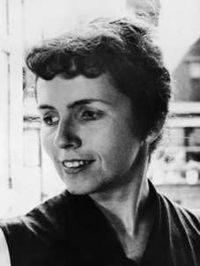
Severyn Bruyn

Recovering Nonviolent History: Civil 
Resistance in Liberation Struggles edited
by Maciej J. Bartkowski is one of the best
books I have read on this subject in decades.
 It is so well documented with cases and so
superbly interpreted with fresh theory that
I wish it could be on the best-seller list. It
tells us how people are learning nonviolent
resistance through the rise of social move-
ments and collective identities. It reveals how
 nonviolent action has worked effectively
using different strategies around the world
for a long time. Notably, the book recovers
new historical cases of civil resistance in addition to the already impressive
database of 106 mass-based struggles against dictatorship, occupation, and
self-determination that occurred between 1900 and 20061, thus encouraging
 further scholarly research.
  
In this book you will find cases of nonviolent resistance from Sub-Saharan 
Africa (Ghana, Zambia, Mozambique), North Africa and the Middle 
East (Algeria, Egypt, Iran, Palestine) Asia and Oceania (Burma, Bangladesh, 
West Papua), Europe (Hungary, Poland, Kosovo), and the Americas (Cuba 
and the United States.) The cases are written in a clear fashion; anyone can 
understand these stories and feel the unexpected power of people. The 
reader will learn a lot about nonviolent resistance in the past and what 
these movements portend for the future.
  
Maciej Bartkowski argues that the Great Man theory of change is not true. 
Significant changes in opposition against oppression do not require a 
charismatic leader like Gandhi. Some of the citizen movements in this book 
did have good leaders (e.g. Hungary, Zambia, Ghana, and Egypt) but others 
were virtually leaderless and still made significant changes.

The author makes a special point. Nonviolent resistance calls for inter-
disciplinary studies. In a time when universities have segregated their
disciplines in departments where faculty do not talk to one another,
these social movements call for collaboration. Such disciplines include
sociology, political science, economics, psychology, anthropology
history, and more. These resistance movements are multi-causal and
can have an impact on many institutions in the whole society. They
affect self-identity, government policies, and can impact on a whole
way of life.

An interesting fact: Nonviolent struggles for self-determination have been
escalating in recent times. The author points to statistical data on this
augmentation. I have been aware of the increase in nonviolent movements
in the last century but I never had scientific data. In the 20th century
alone collective movements began not only under the leadership of
Gandhi in India but Kagawa in Japan, Danilo Dolci in Sicily,
Lanzo del Vasto in France, Mairead Corrigan and Betty Williams in
Ireland, Thich Nhat Hanh and Cao Ngoc Phong in Vietnam, Dom Heldar
Camara in Brazil, Vinoba Bhava in India, Martin Luther King, Jr., Cesar
Chavez, David Dellinger, and Dorothy Day in the United States, and
more. These movements have produced a widespread awareness of t
he effectiveness of nonviolent resistance around the world.2
Footnotes
1. Erica Chenoweth and Maria Stephan, Why Civil Resistance Works. 
The Strategic Logic of Nonviolent Conflict, (Columbia University Press,
New York 2011).

2. Severyn Bruyn and Paula Rayman, eds.,Nonviolent Action and Social 
Change, (Irvington Publishers, New York, 1979).

3. Severyn Bruyn, A Civil Economy (Ann Arbor: The University of Michigan
Press, 2003); A Civil Republic (Kumerian Press, 2005).

Bartkowski sees a “paradigm shift” in the way we understand nonviolent
struggles in nation-states. He sees the importance of small acts of resistance
aligned with “institution building,” how “collective identities initiate
fundamental changes.” Alternative institution building is based upon
associations of people, not states. Civil associations are becoming the ground
 for self-governance in society. My own studies support the author’s outlook.
This growth in civil associations has been part of the evolution of society for
centuries.3

He does not take the traditional focus of historians on structures, military
power and mechanisms of coercion but instead recognizes that the force
shaping nations rests in the purposeful and defiant action of an unarmed
 citizenry. He does not see a tight military state as the basis for explaining
the inability of people to make changes. He does not view the state as
a top down, centralized machine, rather, as a diffused and fragile power
where the voluntary action of ordinary people makes change happen.
The latent power of people becomes evident with the gradual
withdrawal of consent and the accumulation of citizens in disobedience.
 Important changes are made by the autonomous “agency” of people.
The independent actions of ordinary persons make a difference. And it
happens under many different kinds of oppressive structures.

The author points to studies on the greater “efficacy” of nonviolent
campaigns in contrast to violent ones. The rate of success of civil resistance
campaigns is more than two and a half times higher than the rate of its failures
and more than twice as successful as their armed counterparts. Similarly,
Gene Sharp – the founder of cross-national studies on citizen resistance –
' once told me he found fewer people die in nonviolent struggles for
independence than in violent struggles. I hope that more research can
be done on such “efficacy.” It might convince people of their own power
to save human lives.

The use of nonviolent resistance has been taking place well before
Gandhi was born. People throughout history have been relying on
nonviolent methods of struggle. In certain times, citizens have
realized the benefits of nonviolent resistance as opposed to the
terrible consequences of armed struggle. The recognition of
these benefits of nonviolent struggle is increasing around the world.

In one chapter, Lee Smithey points out how nonviolent struggles can
be “integrative” and community making – a theme that comes up
in various empirical chapters included in this book. These case studies
show how people overcome their ethnic, religious, and racial differences
in nonviolent struggles. New “collective identities” rise above
and beyond class and racial differences. People in most cases are not
fighting as pacifists. They are just ordinary citizens who see a wrong and
become concerned and then angry enough to stand up for their rights. They
 are not in the same category as great religious founders like Buddha o
r Jesus who taught about compassion for humanity. Citizens are not
preaching about “loving your enemies.” They are regular people who
see a “wrong” and want to set it right.

Successful resisters have not rationalized their action on their pacifism
or their religion. The 10,000 teachers of Norway who stopped Hitler
from putting Nazi textbooks in their schools did not see themselves
as pacifists. Some died in concentration camps under terrible
conditions but by seeing the effectiveness of nonviolent tactics
they were able to win. Hitler and Quisling lost.

The citizens of Guatemala were not pacifists when they overthrew
Ubico, the tyrannous dictator in the 1940s who admired Hitler. The resistance
movement began when faculty in universities were losing liberties
and marched in protest. This protest led to a buildup of collective
identity and sympathy across the country. One teacher in a march
to the capital was killed by the government and became a martyr.
The resistance spread throughout the country and it finally resulted
in an entire “economic shutdown” of the nation. Ubico had to give
up his power. He went away to Mexico to buy a farm and live by himself.

This book is about the hidden history of nonviolent struggles in society.
Historians ignore these cases of nonviolence, preferring by tradition to write
about kings, emperors, and presidents and the elite. They ignore what the
underclass is doing to make change happen. This prejudice of historians
to write about the elite then leads to the loss of society’s collective memory.
The invisibility of small movements in history impacts adversely on
theories of social change by social scientists.

I hope that social scientists will buy this book about “recovering history.”
It adds to our collective memory and understanding of what has
actually been happening to bring about the formation and development of nations.

Severyn Bruyn, Professor Emeritus, Boston College. He is the author of numerous books, articles and plays, including Nonviolent Action and Social Change,  co-edited with Paula Rayman and an Oratorio "The Teachers of Norway" (that pays tribute to the bravery of the Norwegian teachers who waged nonviolent resistance against pro-Nazi Quisling regime during the Second World War).

Tuesday, March 19, 2013

A Guy Who Sews


Michael Swaine, Free Mending Library, San Francisco, Futurefarmers, eco-fashion, sustainable fashion, green fashion, ethical fashion, sustainable style, make do and mend, collaborative consumption, California College of the Arts
Sitting behind his makeshift “sewmobile” for the greater part of a decade, Swaine says he’s been able to step out of his professional purview to create connections he otherwise wouldn’t have. Although he’s viewed as a “social artist” by some and a curiosity by others, Swaine insists he is merely a fellow citizen, a teacher, and a “guy who sews.”

Viewed as “social artist” by some and a curiosity by others, Swaine insists he is merely a “guy who sews.”

“I never like picking just one label…it cuts off conversations with groups of people,” Swaine tells Ecoutere. “From my side of things, once a month is a small effort and there are many other people doing big important things. My small act is mostly a gesture and for some it means a lot but I think the bigger importance is the example of participating, of being a citizen and acting outside of what is normal.”
Michael Swaine, Free Mending Library, San Francisco, Futurefarmers, eco-fashion, sustainable fashion, green fashion, ethical fashion, sustainable style, make do and mend, collaborative consumption, California College of the Arts

MENDING COMMUNITIES

Swaine’s project began in 2001 under the auspices of the “Generosity Project” for the California College of Art’s Wattis Institute. The lines of the original concept have blurred over the years, attracting not just people who need things repaired but also volunteers who sometimes take over with the sewing and mending.

Swaine considers his setup an ongoing collaboration between himself and the community at large.

There are also customers, many of them regulars, who like to stick around. For them, Swaine brings out chairs so they can linger. Sometimes people don’t need something darned so much as someone to talk to, he says. The term “mending,” he adds, can take on many meanings.
Instead of the one-man performance piece he started with, Swaine now considers his setup an ongoing collaboration between himself and the community at large.
Swaine has many of these life-changing partnerships. An analog designer with Futurefarmerssince 1998, Swaine participates with many of the organization’s interdisciplinary projects, which range from fingerprint-based video games to a hand-drawn survey of Toronto’s city center. His work has been featured in exhibitions at New York City’s Cooper-Hewitt, National Design Museum, as well as San Francisco’s Museum of Craft and Folk Art and Exploratorium.
With the breadth of his experience, one can begin to understand why Swaine dislikes labels. “I think ‘doing good’ is a difficult phrase,” he says. “From my side of things, once a month is a small effort and there are many other people doing big important things. My small act is mostly a gesture and for some it means a lot but I think the bigger importance is the example of participating, of being a citizen, and acting out side what is the normal.”

+ Michael Swaine

Sunday, March 3, 2013

Mother's Paper Trail Indicts School District in Upstate New York


For Pine Plains high schooler Anthony Zeno,
racial harassment turned life upside down (video)
By PAULA ANN MITCHELL from Daily Freeman
P
    
Anthony Zeno had a lot going for him.

He was young, full of dreams and belonged to a
close-knit, loving family. His parents left the fast pace of
Long Island in 2005 and moved their family north to
settle in the quiet Northern Dutchess town of Pine Plains.

It was a new beginning for Henry and Cathleen Zeno, who
wanted to raise their five children in a place with open
space, clean air and old-fashioned values.
“That is one of the things that drove us here,” Cathleen
Zeno said. “We wanted that hometown family feeling.
Unfortunately, we were the wrong color.”

As a dark-skinned, Hispanic male, Anthony, the oldest son,
became the object of scorn, ridicule and even death threats
while attending Stissing Mountain High School in Pine
Plains from 2005 to 2008.

Almost daily, a core group of students made his life a living
hell.  They would hurl racial epithets at him, urinate in his
locker,  yank his jewelry, strike him and often follow him
home, taunting him — sometimes with a noose or
Confederate flag hanging from their vehicles.


There even was an instance when a male classmate
got in Zeno’s face and declared he was going to rape
Zeno’s younger sister. It mattered little that Zeno
stood 6-foot-1 and played on the high school football team.
“It (the harassment) happened every day,” said Zeno,
now 24. “Every day, it was something new. Every day, I was
fighting these things. I couldn’t even go to sleep.”

To make matters worse, those who were supposed to
be fostering an atmosphere of safety in the schools did little
to address the problem, he said. “I had teachers not doing
their job. They literally watched this happen, and they
wouldn’t come forward to say anything,” he said.

Years later, Zeno has managed to put the pieces of his
life back together, though he admits it hasn’t been easy.
He attended Dutchess Community College after graduating
from Stissing Mountain in 2008 and now works full-time
as a direct-care aide for the Taconic Developmental
Disabilities Services Office.

Zeno also took the advanced barber program offered at
Dutchess BOCES and now is a master barber. In his free time,
 he boxes and trains in mixed martial arts. Zeno also is
engaged, and he and his fiancée are expecting their first child.

Zeno also has the monetary assurance that his future will
be a little bit easier, even though it came at such a high cost —
his childhood.  In March 2010, an all-white jury in a federal
discrimination suit filed against the Pine Plains school district
found the district liable under Title VI of the Civil Rights Act
of 1964 and awarded Zeno $1.25 million in damages. Title VI
prohibits discrimination on the basis of race, color or
national origin.

The case, heard in U.S. District Court in White Plains,
involved four days of testimony, including Zeno’s.  A judge
later reduced the award to $1 million, but the school district
appealed just the same. Last December, a federal appeals
court upheld the $1 million judgment against the district,
calling the district “deliberately indifferent” to “physical
and verbal racial harassment” suffered by a former student
at the high school.

District officials, in a statement released in December,
expressed “disappointment” in the outcome and said they
chose not to take the case to the U.S. Supreme Court “based
on the legal advice of the attorneys representing the district
and insurance company.” “We have never tolerated harassment
 in our schools, nor have we failed to
 address known incidents,” the statement read.

“However, as per the court’s dictates, where more than
one incident of harassment of a student occurs by different
students over a significant period of time, it is now clear that
addressing each incident alone is not enough. Broader measures
are required.”

Zeno’s case represented one of the biggest awards ever
 issued for racial harassment at the high school level and is
significant for several reasons,
said Stephen Bergstein, the family’s attorney.

“Student harassment-bullying cases are among the most
difficult civil rights cases to win because the legal standard
requires the student to prove that the school district was
deliberately indifferent to known
harassment,” Bergstein said.

“This means that the jury has to find that the school
district essentially disregarded the problem or that it did
not care or its response to the problem was so clearly
unreasonable that it caused the student to suffer
additional harassment.”

By contrast, in workplace harassment cases, the plaintiff
only has to show the employer negligently responded to
the harassment — a much easier  standard for plaintiffs,
Bergstein noted. “For this reason, many student
harassment cases don’t even make it to trial,” the lawyer
said. “The judge dismisses the case … for lack of evidence
that the school district was deliberately indifferent.”

That was not so for the Zenos, and they made an all-out
effort to get the harassment to stop, including writing
letters to officials and appealing to district Superintendent
Linda Kaumeyer. Bergstein said the school district tried on
several occasions to address the problem,
 including bringing in the Rev. James Childs of Kingston
as a diversity trainer, but that it was “too little, too late.”

“The jurors told us after the trial that they were outraged
that the district dragged its feet in dealing with Anthony’s
harassment and that the superintendent, in particular,
was aloof when Anthony’s mother sent her letters demanding
urgent action on the problem,” Bergstein said.

“One juror was a school administrator who said that his
district would never respond to this kind of harassment
the way that Pine Plains did. He said that the evidence that
the district ignored the Human Rights Commission’s
offer to implement immediate diversity training was
 ‘devastating.’”

It was precisely that for Zeno, too, who still bears deep
scars from the nonstop persecution. He is a private, guarded
man who has turned down countless media requests for
 interviews, but Zeno said he has come to realize that others
might learn from his experience.

That is why he and his mother decided to grant the
Freeman an exclusive interview last week. “I didn’t understand
what racism was ’til I moved up here,” Zeno said by phone
from his Kingston home. As part of the family’s move to
Dutchess County in 2005, Zeno transferred from Longwood
High School in Brookhaven, Long Island, to Stissing Mountain,
a school with a current minority population of 9 percent.

The Pine Plains school district serves students from the
Northern Dutchess towns of Clinton, Milan, North East,
Pine Plains and Stanford, as well as the Columbia County
towns of Ancram, Clermont, Gallatin and Livingston.

“Every culture was represented at the old school,” Zeno
said. “Everybody had their differences, but they worked
it out. Here, I felt like a foreigner.”

Zeno was targeted almost from day one, his mother recalled.

She said she often followed him to school to make
sure he was safe and that as the harassment escalated,
so did her paper trail.

Zeno’s mother even lost her job during the height of it
because she was leaving work so often to intervene on
her son’s behalf with school administrators.

“It got to the point where I had to keep a running log,”
 she said. “My biggest thing ... was I wanted to make sure
my child was safe. We reached out to the NAACP and
brought them to the school. We wanted to start some
changes. Unfortunately, (the school) did not utilize it,”
 Mrs. Zeno said.

Early on, the Zenos also contacted the Dutchess County
Human Rights Commission, which met with school officials
to offer solutions like assigning Anthony an adult
“shadow” as protection. But nothing seemed to work,
his mother said. After the Zenos hired Bergstein, they
began weighing their options.

The family was apprehensive about trial and even offered
to settle the case two weeks before trial for $75,000.
“It was so surreal because it was like, ‘I’m reaching out to
you.’ It was a daily cry, ‘Please, I need you to make sure
he’s safe,’” Cathleen Zeno said.

Instead, the harassment intensified, even reaching the point
where Zeno’s life was threatened, according to his family.

“One of the kids on their Myspace (page) had distributed
through the Internet a $250,000 bounty on Anthony’s head,”
his mother said, adding that it was by no means an isolated
incident.

Another time, two people appeared in a truck outside their home.
Zeno was in the front yard and reported hearing a clicking sound
 that sounded like a trigger being pulled.

When the vehicle showed up at the school the following day,
the building went into “code yellow,” and Zeno’s younger siblings
were removed while he was taken to the principal’s office, his
mother said.

“When it started to get to the death-threat level, I changed my
gears and decided to deal with state troopers,” she said. About
this time, Cathleen Zeno said she almost lost it. “I just broke
down,” she said. “I told Anthony, ‘We need to get you out of
this school,’ but he said, ‘No, Mom. We’re not going to allow
them to run us out of town. We’re going to stand our ground and
get through it.’”

While Mrs. Zeno considered her son a pillar of strength during
 the ordeal — often likening him to the biblical Daniel in the
 lion’s den — Zeno said it was his mother’s courage and his
faith that pulled him through. “Thank God I have the mother
that I have,” he said. “She raised me with religion and told us
that everything happens for a reason, even if it’s negative,
to show you a lesson in life. It was a learning experience.”

Even so, Zeno, who suffers from post-traumatic stress disorder,
has routinely sought therapy to cope.

“God doesn’t give you what you cannot handle,” he said. “You
have to stand. You have to be tough and not let others get the
best of you.”

Zeno has siblings left in the school, and the family is keeping a
close eye on the district to make sure it stays vigilant. In the
meantime, Zeno continues to map out his future.

A key part of that is to start some kind of anti-bullying program
combined with the martial arts to help children find their strength.
Zeno said he’s unsure how he’ll move it forward but that the idea
has been brewing in his mind for some time. “You don’t have to
have muscles or be a badass to stick up for yourself, but if you’re
a person who’s being picked on, it’ll give you discipline and be
a de-stressor,” he said.

He also has another, more personal motive to do something for
future generations of minorities or bullied youths. “I have my own
family now, and I just have to make sure that this doesn’t happen
to my children,” he said.

Monday, February 4, 2013

Rosa Parks demonstrating against apartheid at the South African Embassy in DC in 1985. From the new book, The Rebellious Life of Mrs. Rosa Parks by Jeanne Theoharis

Jeanne Theoharis was as surprised as anyone to learn that Rosa Parks’ work as civil rights activist extended far beyond that fateful day in 1955 when she refused to give up her seat on a Montgomery, Ala. bus. But when Parks died nearly seven years ago, Theoharis started doing some digging and discovered that there was much more to Parks’ story.
Forced to leave Montgomery in 1957 because of death threats and the inability to find work after the bus boycott, Parks spent the second half of her political life in Detroit battling the racism of the North. And yet, in all the public tributes to Parks, there was little mention of this half century of activism.


“Bizarrely, the story hadn’t been told,” says Theoharis, a professor in the Department of Political Science, who has penned several books and articles on the Civil Rights and Black Power movements. “She is one of the most famous women of the 21st Century and there was no scholarly biography.”
Theoharis says the reason for this is threefold. “Because Parks was so famous, many of us assume we know everything about her. Also, a lot of people with progressive or radical politics tend to be in your face; Parks didn’t have that kind of personality.” Finally, Theoharis adds, Parks’ personal papers have been tied up in legal disputes over her estate, which presents an obstacle to any scholar hoping to embark on a comprehensive biography.
But Theoharis wasn’t deterred. She poured over old newspapers, magazines, and the archives of theNational Association for the Advancement of Colored People (NAACP) and other civil rights organizations. She also interviewed family members and those who worked with Parks.

Theoharis’ research eventually turned into The Rebellious Life of Mrs. Rosa Parks (Beacon, 2013), a revealing book about a life that was devoted to helping end segregation and injustice way before that day on the Montgomery bus. The book will be released on January 29, in time for what would have been Parks’ 100th birthday on February 4.
Theoharis structures the text chronologically, starting with Parks’ childhood in Alabama, followed by her marriage, a decade of work with the Montgomery branch of the NAACPP—a chapter that was considered radical at the time—and then on to her bus arrest, the boycott, and what Theoharis calls “the decade of suffering that ensued,” which included health problems, death threats, and financial insecurity.
The book also chronicles Parks’ life after the boycott, when she moved to Detroit with her husband and eventually found work with a young Rep. John Conyers, who had recently been elected to the U.S. Congress.The Rebellious Life of Mrs. Rosa Parks also explores the civil rights icon’s later work as a picket-line protestor and featured rally speaker with the anti-Vietnam and anti-Apartheid movements.
“There’s no doubt her act that day in Montgomery was courageous. It just wasn’t the first time she had done this kind of thing,” says Theoharis, who adds that Parks had routinely refused to pay her fare in the front of the bus and enter in the back, as was the law at the time, and had been kicked off the bus before. She had also refused to use the “colored” drinking fountain.
“She knew full well how dangerous it was to do what she was doing,” says Theoharis. “There was a real threat of violence and no sense that one might possibly accomplish anything for it. She had no idea that this would galvanize a movement.”
But Parks was just the right mix of working-class woman with a “middle-class demeanor,” as Theoharis describes it, that the NAACP leadership could work with. Her history of activism gave the organization faith that she wouldn’t flinch under pressure and that she was perfect person to see through a court case challenging the legality of racial segregation.
The work Parks would go on to do, like participating in the Poor People’s Campaign after Martin Luther King, Jr. was assassinated, would touch on some of the biggest civil and human rights campaigns of the last century.
“Her story is almost like the movie ‘Forrest Gump’ in that she ends up taking part in all these historical events,” says Theoharis. “She had this huge political lifespan and yet what we know about her too often focuses on this one day.”
There’s no doubt Parks is seen as an icon, but if history told a more complete story, Theoharis thinks she would be much more relatable, and useful, to young people.
“If we look at the real substance of her politics, it provides a deep challenge to us in terms of what individual courage looks like,” she says. “And it becomes much easier to see how we work for social change today.”  (From the Brooklyn College Web News)


Monday, January 21, 2013

Myrlie Evers-Williams to lead invocation at the inauguration


Here is Myrlie Evers-Williams speaking at an NAACP rally at Howard University, 50 years before her invocation at the inauguration today. Learn about Myrlie Evers from a National Visionary Leadership Project interview:http://shar.es/C0V8q and about the life and legacy of Medgar Evers:http://bit.ly/T9CpwH Photo: Corbis.

Wednesday, January 2, 2013

Puppets, Peace and Political Art


....A discussion held in December at the Theater for the New City with John Bell, Peter Schumann and Tom Finkelpearl. Both Grace and Bob Nichols are mentioned in this discussion. Bob was an enthusiast of Noh drama and for a period in the 1960's Bread and Puppet created theater directly influenced by this Japanese dramatic form.

Tuesday, December 11, 2012

Happy Birthday, Grace

Gracie and Cyril: An Oral History
From the Paris Review
December 11, 2012 | by Emily Greenhouse
Grace Paley was born Gracie Goodside ninety years ago today, and my grandmother still calls her that. My grandmother’s parents separated when the Depression hit: her father lost his job, and couldn’t countenance his wife, a beautician, the household’s only breadwinner. In summer, her mother stuck around the beauty salon, but my grandmother would visit her aunt and uncle in Long Pond, in Mahopac, fifty miles north of the city. Uncle Al was a piano teacher, and one of his students a girl named Grace. Two years older than my grandmother, Cyril, Grace spent the whole summer in Mahopac. Her father, a doctor, built a house there, and he’d bring the family up from their Bronx brownstone, at Hoe Avenue and 172nd Street. My grandmother remembers everything.
Dr. Goodside—Isaac—he had a chauffeur, Saunders. God forbid you use that word—it was a driver. Gracie’s father, he came from a large city in Russia, not the Pale of Settlement. They did not speak Yiddish, they spoke Russian. His great pleasure was when the Italian fruit vendor came, you know, with his truck. He’d come once or twice a week, and Dr. Goodside came to talk to him in his broken Italian. Gracie’s father, he also was a great fan, a lover, of Victor Hugo—and his son, who became an ophthalmologist, was named Victor. Gracie was the youngest, she must have been at least ten years younger than Jeanne, Jeanne after Jean Valjean. And she was named Grace, and her sister said to me, in Italian, it was Grazie—thanks, thanks. Jeanne told me this when she was already teaching, she was much older, and she was married to a child psychologist, a real son of a b—a child psychologist who hated children. They never had children.
Gracie was unusual, she was extremely bright. Every day she was made to read at least an hour, I think she was made to study Russian. And they had a large house in Mahopac, her parents always encouraged kids to come to her house. Her father was a music lover, and he would invite people over to his house, and play music. He had this phenomenal record player. My Uncle Al, the piano player, was such an SOB—he would say, “I’m not going, he doesn’t know anything about music.” But that’s how I knew Gracie, the lessons. Her parents, they wanted us to come to her house, we went there, we played Monopoly. I would see her almost every day—we would go swimming, we would have a hare and hound race, try not to fall for the false trails the guys set up. And we’d discuss politics and sex and stuff, whatever kids at that age discuss. She was the leader because we always went to her house, and she was the one who had ideas, and who could give advice. Even at that age. Wherever you went to meet, it was always at Gracie’s house. All the kids would follow Grace.
The other children—Victor, he was not a talker, and Jeanne, Jeanne was always apologizing. I don’t think they ever really answered the father. And their mother was a quiet woman. Gracie was always the one who was really challenging him.

When we were kids, she started a little newspaper that she gave out to the community. She wrote, she edited, and she gave it out. I wasn’t there the whole summer—I hated my Uncle Al, the only reason I went there was that I liked the other kids so much. And she more or less wrote the whole paper herself, in the summer, out of Long Pond. I guess it was printed out of a mimeograph, for the whole community. There was a violinist there, Berg, he lived on City Island. There was a man by the name of Gamzou, he taught drama at NYU. There was a man who taught languages—Russian, German, whatever, in Jersey. And Tom Paley, the folk player—no relation—he was there. His father, David, was a writer, and the mother was beautiful, and they married and divorced two or three times, themselves. The paper, it was about things that happened in the community.
She was a child, and already she was interested in writing. I think she went to Evander Childs High School in the Bronx. I know that junior high school, she did get into some kind of a confrontation. I don’t remember what it was, but it was political—I remember that she did have a problem. She was never frightened, you know she was always sure of herself—she would carry an action to what she thought was its logical conclusion.
I think that in college she really started writing, somewhere between the politics and the boys. She went to NYU, and we took a course together there, when I transferred to her school, liberal arts. First I was at the school of journalism. We stayed in touch during college, and on off, she was always involved with this guy and another guy, she was always with involved with so much she couldn’t keep up with everything she was involved with. Maybe that’s why she dropped out of college for a while. I don’t know why. I was involved, in college, with people who were much more radical than Gracie—Communists. She was involved with a guy, she was very unhappy with her life at home, she began to write.
Guys went for Gracie. She really wasn’t that attractive—she was short, I don’t ever remember her without glasses, I don’t know. I think she was always a very down to earth person. There was one guy who came out there, I think she really loved him, but he had a bad heart or something. Her parents discouraged her from having much to do with him. Many years later, he came back to Mahopac, I think he was married, to show the family that he was a success. It was very interesting. He came with someone, a couple, the friend was an executive at Bloomingdale’s.
She was very dramatic, you know, if she was sad, she was sadder than most people … or happier. She was always kind of like … a crisis. I was going with Morty, and she married a guy named Paley, a photographer or something. They had two children, and he began going with other woman. And he left her … or she may have left him, she may have kicked him out. And she became involved with the Democratic club in the Village. And she had a group of women that she began to work with and all, and her sister Jeanne gave her a lot of support at that time. And she was writing.
When Gracie was twenty-eight, I know that she was in some kind of demonstration, and she was arrested. She was put in the house of detention for women, which was Sixth Avenue and Greenwich. Someone told me, and I went, and I was shouting up at her. And then she began writing, her first book was The Little Disturbances of Man. And then she became very involved against the Vietnam War. She had gone to Vietnam a number of times. She was given an award, you know, New York State Writer. The first. She was. Every year the city had a writer, or the state, and she was one of them.
Around 1960, all the women I knew, Gracie too, we went on a train—Women’s Strike for Peace. Bella Abzug, something from Jane Addams, her Women’s Leage for Peace. And the committee for a sane nuclear policy. We would take trains out to Washington, they reserved a whole train.
Later, I met her at a number of marches. By the time the Vietnam War came, she was already a famous writer. But she had no pretensions, she always remained the same. She was always ashamed to tell people that her father was a doctor, because of the people she went with; she went with a lot of poor and working class people. She would never mention it—only later on would she mention that her father was a doctor. She always presented herself as from the working class.
The women she knew in the village, she gained strength from them—women who were dissatisfied with their lives. They were educated women. Or their husbands were away, or their husbands were leaving. From when she was a child on, she anticipated what people were going to say. She was just, like, way ahead of you. She had this gift. Even in college. Even when she was a kid in Mahopac, people kind of just followed her. People would come to her, and dump their problems on her, their stories.
She married a man named Nichols, Robert Nichols, she had lived with him, and then she married him. I would see her on and off over the years. We met her in New York, a few years ago, at this peace demonstration, against the war. They had moved to a town called Bedford Hills in Vermont. And she begged me to come to visit her. And somehow Morty and I promised her that we would, but I never got there. She died maybe a year later.
Crazy—I was ten, twelve years old, I would meet Dr. Goodside on a Friday, Dr. Goodside and his driver, at the entrance of that huge cemetery in the Bronx, Woodlawn Cemetery, the entrance at Jerome Avenue. I got to know the gatekeeper. A chauffeured limousine comes in, and the gatekeeper would say to me, that’s Judge so-and-so, twice a month he comes to his mausoleum. To sit in his mausoleum. Can you believe it? When Dr. Goodside came to pick me up, once, he saw I was all shaken, and I told him what had happened. He thought people were crazy. People are insane! Gracie’s mother died of cancer; Dr. Goodside was very devoted to her. I remember him making her do exercise, mow the lawn, so she could move her muscles. And she would say, wail, It’s too hard! He wanted her to live. When she died, he continued to practice awhile, but then he went into a senior residence. And he began to write poetry. Like Gracie, that was the kid that he was most involved with, there a little competition there. Gracie, she died of breast cancer, too. I met her daughter, Nora. Maybe she was named after A Doll’s House. Or after Seán O’Casey’s Nora—the man is a coward, and Nora’s the one with strength.
When we went to Cuba, Mort and I, two or three years after Chavez was elected, we saw him with Castro. I met a woman who was her neighbor in Vermont. And she said, even there, what an unusual woman Gracie was. She really was very unusual.

Thursday, November 29, 2012

Petition Against Military: Prison for 6 Months


My name is Brian Terrell. I'm co-coordinator of a group called Voices for Creative Nonviolence. We support the petition to ban drones organized by RootsAction. http://act.rootsaction.org/p/dia/action/public/?action_KEY=6180 On November 30th I report for six months in a federal prison in Yankton, S.D., as a result of protesting drones.

The appearance of war being made easy by drones is resulting in more war. In Afghanistan, Pakistan, Yemen, Somalia, and in places we don't know about, in places where we are not at war, we're sending these unmanned pilotless airplanes into foreign air space to hunt down people who've been accused of crimes only in the private court of the administration. They're hunted down and killed along with anybody who might be in the immediate vicinity.

Drones are creating new wars rather than scaling down old ones. Drone pilots in Afghanistan have been targeted and killed. Drone pilots in the United States suffer PTSD at higher rates than real pilots. Drone victims are 98% innocent civilians according to the recent Stanford/NYU study. The other 2% are targeted victims of murder without charge, trial, due process, or in many cases even knowing the target's name. Drones buzzing over houses traumatize children before they kill them. That those children are (in most cases) not American hardly diminishes the immorality. Drones are rapidly being developed and deployed by other nations.

Would you support the equal right of other nations to kill with drones in this country? And if not, why not? And how can that thinking not apply to U.S. policy as well? As I head to prison I urge you to add your name to the petition to ban drones and to ask others to do so. http://act.rootsaction.org/p/dia/action/public/?action_KEY=6180
Back on April 15th, about 40 people, mostly from the Kansas City area, went to Whiteman Air Force Base and held a short rally outside the gates on a public right of way.

We had a petition -- an indictment we called it -- that listed the laws that drones are violating and the damage they are doing. We took that to the gate and were stopped. Three of us asked directions to deliver the petition and were immediately put in handcuffs. About 40 military police in full riot gear appeared (video [ http://www.youtube.com/watch?v=uXkiyGXUF3c ]) and did a choreographed dance including high kicks and grunts and beating their shields, two steps forward and one step back, to get rid of the rest of the U.S. citizens, who were acting legally under the First Amendment. At my sentencing I told the judge: "Each of the government's witnesses, all of them Air Force police personnel, testified that participants in this protest were nonviolent, respectful and peaceable in assembling at Whiteman Air Force Base, a government installation, to petition that government for redress of a grievance, demanding that the remote control killing carried out daily from Whiteman cease. They testified that at no time, before or during our protest, did they perceive us as a threat. "Our expert witnesses testified that our behavior was consistent with the activities that the drafters of the First Amendment intended to be protected, not persecuted, by the government.

The order and security of the base would not have been compromised had the security police allowed us to proceed to the headquarters to deliver our petition. No testimony to the contrary was offered this court. "Instead of planning to accommodate a constitutionally protected peaceable assembly, however, the Air Force chose intimidation and conspired to deprive us of the rights they are sworn to protect.

We learned from government witnesses that the phalanx of goose-stepping riot police is a 'Confrontation Management Team,' deployed only in the case of preannounced events. Whiteman security did not call out the Team to defend the base but to intimidate citizens engaged in lawful activities." Sign the petition to ban militarized drones now, before it is delivered to government officials. http://act.rootsaction.org/p/dia/action/public/?action_KEY=6180

Please forward this email widely to like-minded friends. --Brian Terrell for RootsAction.org

Wednesday, November 28, 2012

1,000,000 Strong Against Off-Shore Drilling

                                           B.C. First Nation Members Evict Pipeline Surveyors, Set Up Road Block

Members of a First Nation in Northern British Columbia have evicted surveyors working on

 a natural gas pipeline project from their territory, seized equipment and set up a roadblock against all pipeline activity. The group identifying itself as the Unis'tot'en clan of the Wet'suwet'en Nation said surveyors for Apache Canada's Pacific Trails Pipeline were trespassing.

"The Unis'tot'en clan has been dead-set against all pipelines slated to cross through their territories, which include PTP (Pacific Trails Pipeline), Enbridge's Northern Gateway and many others," Freda Huson, a spokesperson for the group, said in a statement.

The Unis’tot’en are now calling for solidarity and support actions to reaffirm their position and to amplify the message to Industry and Government that no proposed pipelines will proceed in their territories. There is a call for immediate actions on TUESDAY, NOVEMBER 27th to ensure that corporations, investors, and governments get a clear message that they have no right or jurisdiction to approve development on Unist’ot’en lands.

Read the full story and watch video : http://bit.ly/10Ie9kS
To help with the Nov. 27 action please see:
http://unistotencamp.wordpress.com/
Image credit: www.whitewolfpack.com/www.ctvnews.ca/
[M]

Monday, November 26, 2012

Celebrations for Grace's Birthday


HAPPY BIRTHDAY, GRACE PALEY!!
Judith Arcana writes: Hello everybody -
 I'm writing to invite you to a party in Portland.

December 11, 2012 will be the 90th anniversary of Grace Paley's birth.
Grace was one of our most committed, hopeful & joyous activists;
one of the greatest short fiction writers ever to use American English;
a notable poet and essayist - and a serious ping-pong player.

As some of you know, I've been organizing Grace-birthday events since 2007, the year she died.
This'll be the last -
Years ago, when I began writing about her, she told me she did not want "to be lionized."
 In the past five years I believe I've gotten too close to the savannah - I can hear some growling. Luckily, 90 is a good number to go out on.

Come to this party celebrating Grace's life and work - bring your friends and neighbors, your colleagues and pals.
 Watch an award-winning documentary film - Grace Paley: Collected Shorts and Hear a posse of Portlanders reading Grace’s poems & stories & essays ......
Ben Parzybok ... Constance Hall ... Harold Johnson ... Khanh Pham ... Laura Moulton ... Liz Woody ... Michael Heald ... Sandy Polishuk ... Steve Williams ........ with me as MC

Other Details: free admission - courtesy of generous theater owners & filmmaker popcorn, candy & drinks for sale at the counter + free birthday cake This event is partially supported by a grant from Soapstone, Inc.
Grace Paley: Collected Shorts Director: Lilly Rivlin Country: USA Runtime: 75 minutes

Grace Paley was the child of Jewish immigrants who fled oppression in Russia. They instilled in Grace a lifelong commitment to fighting social and political injustice. She was jailed many times for protesting war and the proliferation of nuclear weapons. She often referred to herself as a “combative pacifist”. This small, feisty woman spoke with the rough-around-the-edges accent of the Bronx neighborhood where she grew up. Her work combines the personal with the political befitting a woman whose private views on world events led her to take public action. As a master of the short story, she has been compared to Chekhov and her bestselling work Enormous Changes at the Last Minute brought her international fame. This documentary traces the life of this ordinary woman with an extraordinary talent for poetry and prose through her own stories and the stories of her family, friends, colleagues and critics. The film depicts the delicate balance of the three pillars of Grace Paley’s life…activism, writing and her circle of family and friends. It explores the power of literature and Paley’s capacity to touch and comfort readers, as well as her ability to achieve the most human reaction to life’s challenges…laughter.

Grace Paley was true to her ideals to the last. No small feat when you consider the dreams she had for a better world for her grandchildren. “It would be a world without militarism and racism and greed and where women don’t have to fight for their place in the world.”

Wednesday, October 31, 2012

Beyond Borders: Linking Our Stories

http://www.kickstarter.com/projects/401497233/beyond-borders-linking-our-stories
The power of a woman telling her story lies in the transformation she lives when she hears the strength of her own voice and in the transformation we live when we are forced to shift our own ideas about women as faceless objects without a voice. 
This project aims to establish a dialogue and cooperation between Armenian and Turkish women, to build solidarity among women across the closed Turkish-Armenian border and to develop an innovative approach to peace-building by collecting a number of interviews by and from women in both countries, which will then be turned into a performance and book for larger audiences. Some of the themes that will be explored include violence, poverty, family, and sexuality. One of our main goals is to make visible ordinary women's lives living across the border, and to make their stories accessible to women in both countries, as well as to women in other countries with conflicted borders.

Because most policies and peace negotiations are usually implemented at higher levels of government where women's voices are not often heard, this project will place the power to create peace into ordinary women's hands. After all of the interviews are conducted (approximately 30 in total from both sides) a group of women from Armenia will travel to Turkey to meet and work with a group of women from Turkey for two weeks. The interviews that were conducted will be discussed and analyzed, workshops on effective peace-building and conflict resolution will be given, and a short film will be made documenting the process of the two groups coming together and preparing for a final performance at Madrasa Theater in Sirince, Turkey. Some time after this initial meeting, the group will also meet in Armenia to hold a second performance in Yerevan.
This project is a collaboration between volunteers from the Women’s Resource Center in Armenia and volunteers from AMARGI, a women’s collective in Turkey. We believe that women should take peace into their own hands and one way to begin is by sitting down with one another, across borders and across difference, to tell our stories.
Your donations will help us cover our travel costs to Sirince, Turkey as well as some of the travel expenses to conduct interviews in Turkey and Armenia.
Thank you for all your support and solidarity in helping us realize our goal! Please help us spread the word and share widely!
Also, check out our blog for stories as we conduct our interviews: www.linking-our-stories.tumblr.com

Friday, September 14, 2012

US Budget is a war machine.

Posted by Dennis Kucinich and Nora.